




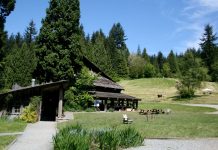






Snohomish County is home to over three dozen native tree species and countless imported varieties. Towering spruces and cedars create the quintessential Northwest landscape. They made the PNW famous for its woodsy, cozy vibes unmatched in other areas of the country. As Snohomish County continues to grow, it is more important than ever to protect the tree canopy, which could disappear without clear policies in place for the development of new roads, light rail, and homes.

Snohomish County Urban Tree Canopy Policy
In 2024, Snohomish County implemented an Urban Tree Canopy Policy updated from the 2014 project. This was an amendment added to the Natural Environment Element Plan. In the 2014 policy, the baseline canopy coverage was 30 percent, but was raised to 38 percent in the 2024 policy.
Any group of trees within a city is called an urban forest. An urban forest is a green space, tree-lined streets, parks, woods, or backyard trees. Urban Forests in the U.S. alone offset pollution from almost 10 million cars. Having trees in cities has been proven to reduce premature births, reduce mental health problems, improve cardiovascular function, and lower crime. They’re also proven to bolster active lifestyles and lower overall temperatures.
The Snohomish County policy establishes a clear vision for the future of urban forests. It states that the County must have green spaces in unincorporated areas covering 38 percent of the land.
The policy aims to preserve tree canopies and strives for recognition as an Evergreen Community. In Washington, an Evergreen Community is recognized by the Department of Natural Resources as a county with commitments to urban forestry with planned efforts to manage urban forests.

Trees are Crucial to the Planet and Our Health and Happiness
Trees enrich our lives in unlimited ways. They clean the air of harmful pollutants, filter contaminants from groundwater, reduce stormwater impacts, lower erosion, and reduce noise and light pollution. Trees reduce energy impacts by cooling streets and homes during increasingly warmer summers.
Trees have been proven to have incredible effects on the human body. They lower cortisol, anxiety, and blood pressure. They have been found to strengthen the immune system, improve happiness, focus, sleep, energy, and can even quicken recovery from illness or surgery. They’ve been found to cure depression, rejuvenate mental acuity, and improve the brain’s ability to handle stress. Not only do they help humans, but they provide homes for birds, insects and animals.
Business districts with tree-lined streets draw more visitors and accumulate higher sales for small companies.

Snohomish Tree Canopy Project Goals
Currently, the county is hitting its goals with an estimated 38 percent of unincorporated urban land covered by urban forests. As of 2026, the county and its developers are holding this percentage strong. In 2025, almost 33 percent of new developments exceeded the limit. In 2025, 4,600 trees were planted in new developments. The clear standards set forth by the county allow developers to understand exactly what is expected, and often they exceed the expectations.
“For 2025, 57 percent of projects met their tree canopy requirements by planting new trees, while the remaining 43 percent relied partly or entirely on retaining existing trees,” reported in the 2025 Tree Canopy Monitoring Report.
Snohomish County Tree Canopy Requirements:
- 10+ lot subdivisions – 30% coverage
- 4-9 lot subdivisions – 25% coverage
- Single-family detached units – 15% coverage
- Urban Center / Mixed-use projects – 15% coverage
Developers are receiving benefits for keeping up their end of the plan by sometimes being granted incentives for meeting community goals. Some developer benefits for preserving the tree canopy are: home density or building height bonuses, adjusted road setbacks, and modified parking requirements.
The Snohomish Tree Canopy Project goal is for the county to keep or create urban forests throughout unincorporated areas of Snohomish County. In order to do this, they had to create an Urban Forest Management Program under the 2024 policy.
The program makes decisions about tree preservation, maintenance, and planting over the next 20 years and incorporates more areas than the previous policy. These benefits are created to maximize health and aesthetics in more areas for the benefit of Snohomish County residents.
An Urban Tree Canopy GIS Map can be found here. This map allows users to find canopy coverage in the county and other public lands.

Educational Benefits Proposed in the Policy
Snohomish County is working to educate and provide volunteer opportunities for partnerships with the public, organizations, and schools.
If you’re interested in volunteering to help with the project, there are opportunities:
- Snohomish Conservation District Volunteer Page
- Snohomish County Parks Volunteer Programs
- Join a tree planting event through the Snohomish Conservation District Urban & Community Forests Program
- Help remove invasive species to restore native trees with the Healthy Forest Project.
Check with your city website for more volunteer opportunities in your neighborhood.
Thanks to the forward-thinking Urban Tree Canopy Project in Snohomish County. This project and the people who work for it are creating a beautiful, happier, healthier place to live for generations to come in the Pacific Northwest.


